French in Newfoundland
par Rompkey, Ronald
Today, French-speakers represent only a small fraction of Newfoundland and Labrador's population. Although, since the 16th century, the French have left many traces of passing in the history of this territory, their presence today more resembles the stuff of imagination rather than anything concrete or deeply rooted. This anthropological reality is somewhat like a "phantom" cultural community which is fed by numerous memories, cultural echoes that have been passed on by history and literature, as well as by the names of places and a few traces of a past that have almost vanished. Yet, the region's French past is well acknowledged, studied and even commemorated. The 2004 celebrations were such an occasion to renew the French cultural heritage of Newfoundland and Labrador.
Article disponible en français : Français à Terre-Neuve
Past and Present French-Speakers
Today, in the province of Newfoundland and Labrador, approximately 0.5 percent of the population are French-speakers. It is a very small minority group concentrated in three regions: the Port-au-Port Peninsula, Labrador City and the capital, St. John's. For the most part, the French-speakers of the Port-au-Port peninsula live in the Bay St. George region, in the southwest portion of the island. In the Avalon Peninsula, where the metropolitan region of St. John's is located, lives a more diverse community of French-speakers composed of Acadians from the other Maritime Provinces and of French-speakers from Quebec and Saint-Pierre-and-Miquelon. There is also a French-speaking population in Labrador, notably in the mining cities of Labrador City and Wabush, near the Quebec border. But these contemporary French-speakers are not representative of the various groups that were a part of the long history of the French on the island.
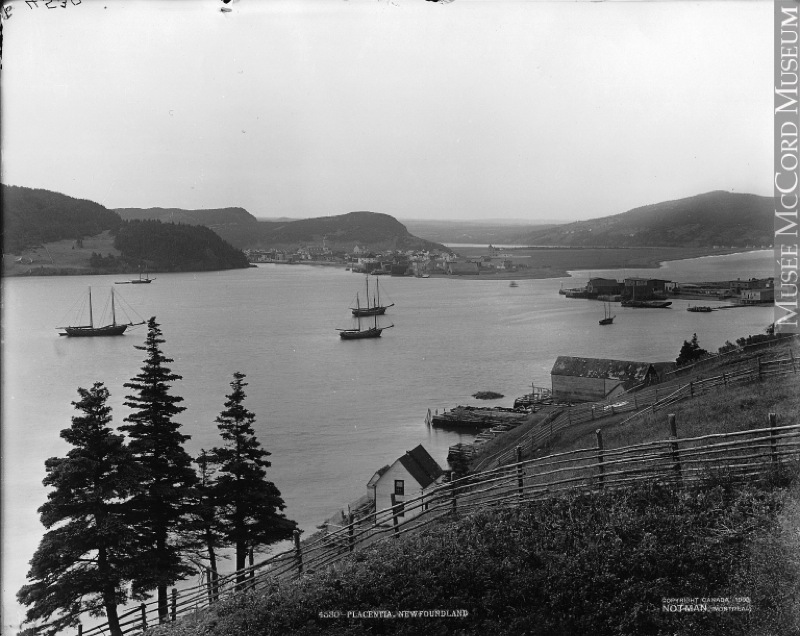
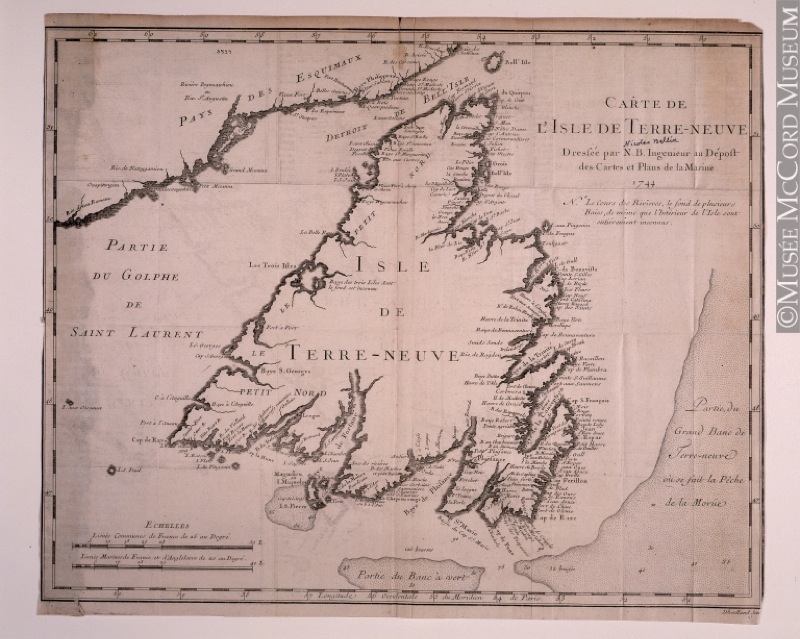
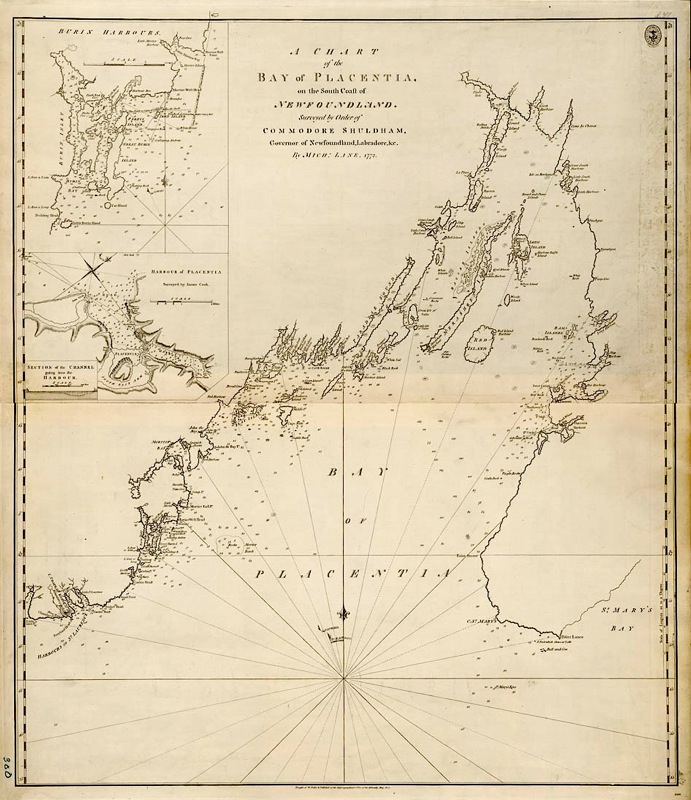
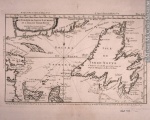
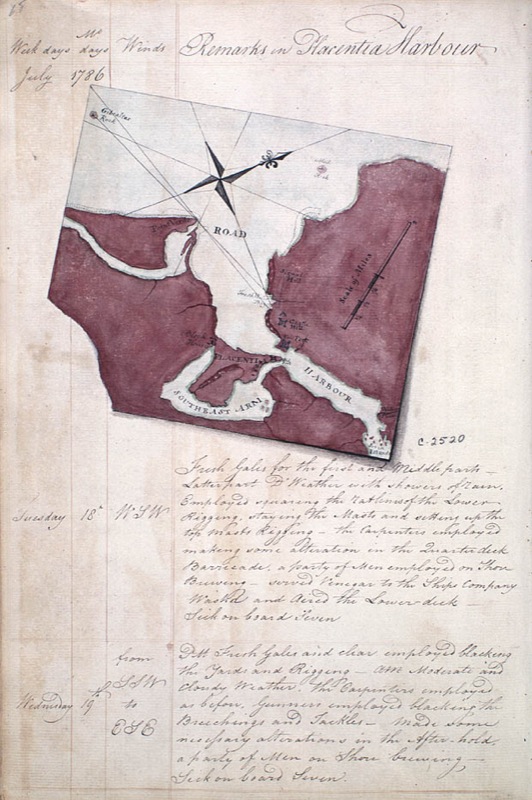
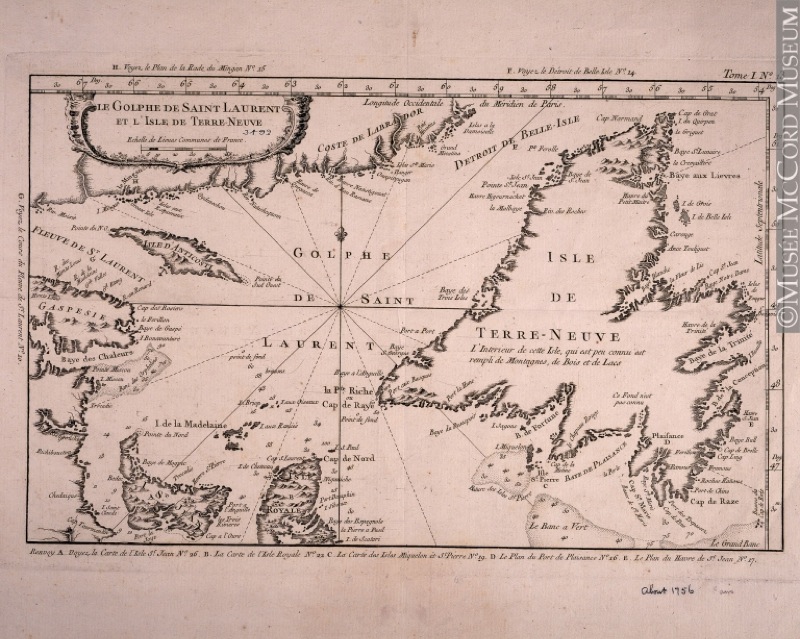
Newfoundland and Labrador's history and literature have almost exclusively been written from an angle that embraced the imperial discourse of Great Britain. But there exists another version, that of the French settlement on the Island, which existed even before the arrival of Jacques Cartier in 1534. One must remember that this territory was first named Newfoundland by Giovanni Caboto (John Cabot) who left from Bristol, England, sailed west and landed there in 1497. The French version of the name appeared in 1524, when Giovannida Verrazano used the term Terra Nova on his map of 1529 (NOTE 1). Around 1550, each year, some 500 ships left various French harbours and headed toward Newfoundland (NOTE 2). And so, the French government established a royal colony in Plaisance (Placentia today) in 1655, in the south of the island, while St. John's remained the centre of activity for the English. The French also named many places all along the west, north and south coast-all the way to the archipelago of Saint-Pierre-and-Miquelon. The passing of the French thus left its mark onthe island's toponymy.
A Historic Heritage
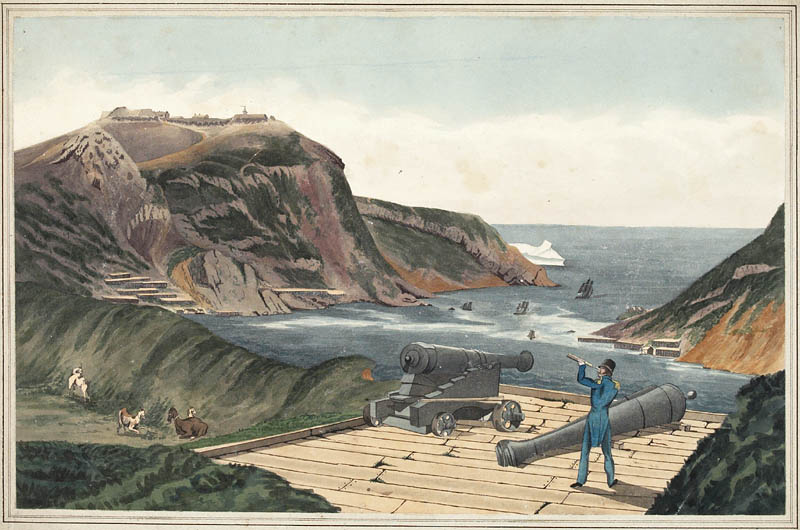
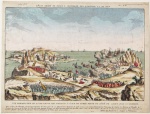
The island was at war from 1660 to the signing of the Treaty of Utrecht in 1713. Placentia was attacked twice by the English (1690 and 1692). On February 25th, 1690, 45 English corsairs took part in the initial attack; it was described by Pierre-François-Xavier de Charlevoix in his Histoire et Description de la Nouvelle-France (1744) (NOTE 3). The 1692 attack was described by the Baron of Lahontan, an officer of the French Marine Corps (NOTE 4). As for the French, Pierre Le Moyne d'Iberville launched his famous attack on St. John's from Placentia during the winter of 1696-1697. Having discreetly arrived in Placentia, the French commander lead his troops in snow shoes across the Avalon Peninsula to storm the English colonies on the Eastern coast of Newfoundland, destroying buildings, burning fishing boats, emptying codfish warehouses and seizing all the cattle. In his book, Charlevoix gives a thorough description of the events that took place during the raid. Charlevoix's account helped d'Iberville earn a reputation as a bold commander and the Canadians earned the reputation of being courageous fighters in winter conditions (NOTE 5). Yet, it was Abbot Jean Baudoin, who joined d'Iberville as chaplain that left the most vivid descriptions of the siege of Saint-Jean [the French name for St John's] and of the hardships suffered by its inhabitants and its garrison (NOTE 6).
Despite these conflicts, fishing activities continued for the thousands of French sailors hired to fish overseas and who needed the shores of Newfoundland to dry a great deal of the fish caught on the Grand Banks. Traditionally, they embarked in March of each year on a number of ships, four to eight hundred, which left from Dieppe, Fécamp, Granville and Saint-Malo harbours to spend the next six months fishing on the banks. But those French Terra-Neuvas left almost no trace of their passage, with the exception of a few place they gave Normand and Breton names that still exist today.
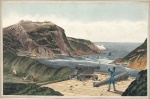
![Panoramic view of French Landing on the Newfoundland Island from the west side of Saint Jean [today's St. John's] (around 1762)](/media-2004/Terre-Neuve_St-Jean.jpg)
Newfoundland Island became British territory in 1713 after the Treaty of Utrecht. From that day on, French fishermen only maintained their right to fish in the waters surrounding Newfoundland and to dry their codfish on its shores. They weren't however allowed to build permanent buildings there. Their activities were limited to the west coast of the island (called French Shore) and France kept the archipelago Saint-Pierre-and-Miquelon as a supply station. After that, a series of conflicts erupted between Newfoundland fishermen and French fishermen, as the latter would be about their business on the French Shore. These conflicts between fishermen had to be arbitrated up until the signing of the Entente Cordiale of 1904. In the meantime, the rights of the French were under the protection of the Newfoundland Naval Division and its base (NOTE 7).
The two nations continued to fish cod while respecting past agreements, even though the Utrecht Treaty had officially recognised England's sovereignty there. The French Shore stretched from Cap Bonavista, to the north of the island, to the Point Riche, on the west coast. English fishermen were forbidden to occupy or make use of the area between those two points on the coast. In 1763, the Treaty of Paris renewed this agreement, with the exception that England restricted France's rights to the west coast of Newfoundland and to the east side of the Northern Peninsula in 1783, taking away France's rights to the coast between Cape Bonavista and Cape St. John. And so, Newfoundland became a place occupied only seasonally by the French.
An Ethnologic and Scientific Heritage
Although the French have mostly only occupied Newfoundland Island during the fishing season, over four centuries of seasonal visits, they have established various rituals, ceremonies and songs and they also produced a lot of travel literature and of novels about life at sea on the Grand Banks. Thus, in his Aventures (1738), Claude Le Beau describes the Bonhomme Terre-Neuve rite, which reminded him of a similar ceremony performed when sailors crossed the Equator. It was a mock christening for sailors newly arrived on the Grand Banks. The ship's captain acted as celebrant and newcomers had to choose between being immersed and buying a round of drinks for all their shipmates. Le Beau writes that this ancient custom was so faithfully respected "that I believe they would have rathered give up the Christian christening" (NOTE8). Constant Carpon, professional surgeon who practiced from 1826 to 1865, also describes a ceremony in connection with the codfish industry: the triumphant parade of the salter [a specially skilled individual who oversaw the salting of the catch]. An almost military like procession was organised on the last day of the fishing season, the day before the fleet returned to France. On a bed of green leaves they would lay a crown of intertwined birch, fir and juniper branches. The salter would be brought, crowned and laid down on a litter born by four men. Bearing the national flag at the end of a rake handle, a standard-bearer would join the procession (NOTE 9).
In the 19th century, observers and scientists began to show a renewed interest in the natural history of the island and for the cultural evolution of the colony. A great number of experts came to the island. Among them, Auguste Bachelo de la Pylaie, naturalist and archaeologist, who left his vast collection to the library of the Muséum National d'Histoire Naturelle de Paris. In addition to his research on the fauna and flora of Newfoundland, he dedicated himself to the study of the fog that regularly forms there, analyzing the various properties of oceanic or continental condensations, as well as other water vapours. He also identified various types of trees and plants and inquired about the existence of potential mineral deposits.
The Ongoing Presence of French Fishermen
In 1815, after the Treaty of Paris, in order to encourage fishermen to fish overseas, the French government offered bonuses to ship owners: fifty francs for each man who worked in a coastal fishery and fifteen francs for those fishing on the Grand Banks. As a result, the census of 1828 recorded more than 9,000 men who went to fish on the northwest shore of Newfoundland. In1830, the number of ships of the fishing fleet rose to a total of 300 or 400 boats with 12,000 men on board. This is why the custom of hiring Newfoundlanders started up again in 1816, when French fishermen, who, upon returning to the site of the previous year, discovered that English people had settled in almost every haven. Knowing they would return to the same place the following year, the captains tolerated them instead of driving them away. They left their equipment in their care and, in return, paid them in fishing lines, hooks, etc. that they could use to fish for themselves. Since that time, this bicultural agreement continued. Travel accounts of that time speak of the existence of small groups of English or Irish inhabitants who were able to subsist year after year without the support of government services. In the summer these people would trade a lot, selling wood and different types of baits; in the winter they kept a watchful eye on the French boats and equipment. It was a custom born of habit, a necessary agreement that was settled without any opposition.
Although the practice had been illegal since 1713, it went on secretly. Boats, scaffolds and other buildings were left in the care of a few British subjects who received enough payment in kind to live on and that they supplemented this with seal hunting and selling furs. In the middle of the 19th century, the French built great boats in these local havens and stored them there during winter. Although most were eventually evicted by force, some of the English-speaking inhabitants who had settled in these French havens had succeeded in making an informal and viable, although illegal, agreement that went on for a long time (NOTE 10).
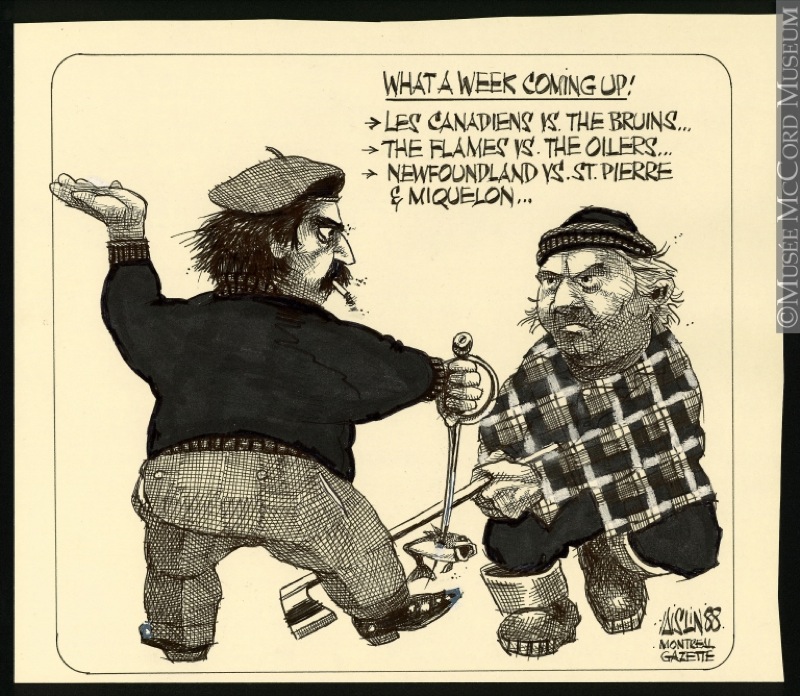
In 1832, Great Brittan granted Newfoundland the right to a representative government and then in 1855 the island region was granted political autonomy under a responsible government (elected and accountable). During that same period of time, one of the most significant events took place: the creation of a French consulate in St. John's. This post enabled the French government to create a network of agents operating out of the Quebec City consulate that, along with the Newfoundland Naval Divisions and its base, represented French interests in all its North American possessions (NOTE 11). In 1854, the French government created an agency in St. John's, Newfoundland, before creating a Consulate in Quebec City in 1859. The ambiguous situation of Newfoundland was finally resolved with the Entente Cordiale of 1904, which restricted the French's fishing rights to the Grand Banks and to the territorial waters of Saint-Pierre-and-Miquelon.
The 2004 Celebrations and the Weight of Past
The 2004 celebrations commemorating 400 years of French presence on the island allowed Newfoundland and Labrador to honour the existence of an almost invisible subculture in the province. On that occasion, in addition to the social festivities, the population commemorated the existence of many families that are the descendents of French fishermen, as well as the existence of cemeteries linked to shipwrecks and other archaeological remains that confirmthe long history of French overseas fishing expeditions. In 2004, as a part ofthe celebration activities, fishing boats were built according to the original specifications of those of the French fishermen; stone ovens for baking bread were also built; and everyone sang sailor songs. And so, for the first time, Newfoundlanders celebrated the historical presence of the French on their land, as well as the traces they left in the collective memory of the people, there by offering the possibility to study and visit the places where the French once settled a long time ago.
Newfoundland and neighbouring lands have long been depicted as exotic places in the literature and shared memory of the French. In his book Non-Lieux (1992), the anthropologist Marc Augé suggests that an anthropologist and his subjects share one thing in common: that they inhabit, live, work, defend and guard the borders of the same place. However, both groups also recognise that land holds the remnants of ancestors or spirits, which the people of this land hold dear to their hearts, as if the people who celebrate them today also represented the very essence of their past. In that sense, Newfoundland has been a mythical place for the French. And so this almost unnoticed piece history will carry on as long as the memories of the great expeditions overseas, as well as the artefacts and documents the French have written or left behind continue to exist.
Ronald Rompkey
Professor, Department of English
Memorial University, St. John's, Newfoundland
NOTES
Note 1. Marc Lescarbot, Histoire de la Nouvelle-France, p. 27-29.
Note 2. Georges Musset, "Les Rochelais à Terre-Neuve, particulièrement de 1525 à 1550", p. 137-145.
Note 3. Pierre-François-Xavier de Charlevoix, Histoire et description générale de la Nouvelle-France, vol. 2, p. 74.
Note 4. Louis-Armand de Lahontan, Nouveau Voyages de Mr le Baron de Lahontan dans l'Amérique Septentrionale, 1, p. 241-246.
Note 5. Charlevoix, vol. 2, p. 185-198.
Note 6. Jean Baudoin, Journal d'une Expédition de d'Iberville, p. 41-51.
Note 7. See, for example, [Jules Sandeau], "Pêcheries de Terre-Neuve et lesTraités", p. 130-141; and Julien-Olivier Thoulet, Un Voyage à Terre-Neuve, p.46-47, 49-58.
Note 8. C. Le Beau, Aventures du Sr C. Le Beau, p. 34.
Note 9. C.-J.-A. Carpon, Voyage à Terre-Neuve, p. 102-106.
Note 10. Ronald Rompkey, "Sans Moyens Visibles: les Gardiens Terreneuviens etla Pêche Française", Annales du Patrimoine de Fécamp, No. 10, 2003, p. 67-71.
Note 11. See Jacques Portes, "L'Établissement du Réseau d'Agences ConsulairesFrançaises au Canada (1850-1870)", Études Canadiennes, No. 3, 1977, p. 59-71.
BIBLIOGRAPHY
Augé, Marc, Non-Lieux : Introduction à une anthropologie de la surmodernité, Paris, Éditions du Seuil, 1992.
Baudoin, Jean, Journal d'une expédition de d'Iberville, ed. l'abbé A. Gosselin, Évreux, Imprimerie de l'Eure, 1900.
Carpon, C.-J.-A., Voyage à Terre-Neuve : Observations et notions curieuses propres à intéresser toutes les personnes qui veulent avoir une idée juste de l'un des plus importants travaux des marins français et étrangers, Caen, Eugène Poisson ; Paris, Éditions Dutot, 1852.
Charlevoix, Pierre-François-Xavier, Histoire et description générale de la Nouvelle France, avec le journal historique d'un voyage fait par ordre du Roi dans l'Amérique septentrionale, 3 vols., Paris, 1744.
Lahontan, Louis-Armand de, Mémoires de l'Amérique septentrionale, ou la suite des voyages de Mr le baron de Lahontan, 3 vols., Amsterdam, 1705.
Landry, Nicolas, Plaisance (Terre-Neuve), 1650-1713 : Une colonie française en Amérique, Québec, Éditions du Septentrion, 2008.
Le Beau, Claude, Avantures du Sr C. Le Beau, avocat en parlement, ou voyage curieux et nouveau parmi les sauvages de l'Amérique septentrionale, Amsterdam, Herman Uytwerf, 1738.
Lescarbot, Marc, Histoire de la Nouvelle France, Paris, Jean Milot, 1609.
Musset, Georges, "LesRochelais à Terre-Neuve, particulièrement de 1525 à 1550", Bulletin de la Société de géographie commerciale de Paris, 14, 1891-1892, p. 137-145.
Perret, Robert, La géographie de Terre-Neuve, Paris, E. Guilmoto, 1913.
Portes, Jacques, "L'établissement du réseau d'agences consulaires françaises au Canada (1850-1870)", Études canadiennes, no 3, 1977, p. 59-71.
Rompkey, Ronald, En mission à Terre-Neuve : les dépêches de Charles Riballier des Isles (1885-1903), Rennes, Presses universitaires de Rennes, 2007.
Rompkey, Ronald, "Sans moyens visibles: les gardiens terreneuviens et la pêche française", Annales du patrimoine de Fécamp, No. 10, 2003, p. 67-71.
Sandeau, Jules, "Pêcheries de Terre-Neuve et les traités", Revue des deux mondes, 6, 1874, p. 111-141.
Thoulet, Julien-Olivier, Un Voyage à Terre-Neuve, Paris,Berger-Levrault, 1891.
Additional DocumentsSome documents require an additional plugin to be consulted
Images
-
 Intérieur d'une cab
ane, Labrador, ... -
 Cap Charles, Labrado
r, T.-N., 1908 -
 Carte de l'Isle de Te
rre-Neuve, 1744 -
 Carte de la baie de P
lacentia au sud...
-
 Carte marine du port
de Placentia, 1... -
 En traîneau à Terre
-Neuve, 1847 -
 L'entrée de St. John
's, Terre-Neuve... -
 Le golfe de Saint Lau
rent et l'isle ...
-
 Placentia, T.-N., 190
8 -
 Terre-Neuve vs Saint-
Pierre-et-Mique... -
 Vue Perspective de la
Descente des F...